
Blog
The Provider Isn't Ignoring You: Why Medical Records Retrieval Stalls in California Workers' Compensation

Most stalled records requests are not being ignored. They are defective, unassigned, or sitting in a queue nobody is working. Knowing which of the three you have is what gets the file moving, and a sloppy request costs more than time.
A records request that has gone quiet feels like one problem. It is usually one of several, and each calls for a different response.
Start with what catches anyone who has worked in civil litigation. The consumer-notice rules that govern most California records subpoenas do not apply here. Code of Civil Procedure 1985.3 requires a Notice to Consumer before personal records are subpoenaed, and subdivision (j) excludes proceedings under Division 4 of the Labor Code, which is workers' compensation. Section 1985.6, the parallel provision for employment records, excludes Division 4 in identical terms. A paralegal moving from civil practice looks for a requirement that is not there. One moving the other way omits one that is.
What governs instead is narrower, and it is where a lot of medical records retrieval in California workers' compensation quietly fails.
Three requirements a civil template will not meet
Rule 10640 of the Appeals Board's rules is the operative provision. The Board issues subpoenas and subpoenas duces tecum on request, in accordance with Code of Civil Procedure sections 1985 and 1987.5 and Government Code section 68097.1. The rule then adds two requirements in one sentence: subpoenas must be on forms prescribed and approved by the Board, and they must contain an ADJ number. A third sits on the form itself.
For records, that form is DWC WCAB 32, the Subpoena Duces Tecum. A civil template is not the same document, and the form prints its own warning on the face: subpoena invalid without declaration.
The declaration sits on the reverse. The attorney or representative of record must state that the named person has the documents in their possession or under their control, and that the documents are material to the issues in the case, with the reasons given. Not a box to initial. A statement under penalty of perjury that has to say something specific about why these records matter in this case.
The form carries instructions people skip. Records may be produced as authenticated copies under Evidence Code 1561, X-rays are excluded unless specifically mentioned, and a subpoena to the Highway Patrol, a sheriff's office or a city police department is ineffective without notice from the Board that the witness fee has been deposited under Government Code 68097.2.
A subpoena duces tecum also has to describe the material exactly. A broad request is not a strong request. It is a quashable one.
Why a silent provider is often a compliant one
None of this fails loudly. A records department that receives a package on the wrong form, missing an ADJ number, or with a declaration that says nothing about materiality, does not usually write back to explain. It sets the request aside.
So the first question on a stalled request is not how hard to push. It is whether the request was answerable when it arrived. That check separates a genuine subpoena records delay in California from a request that was never going to produce anything.
Four ways a request goes quiet
It was never followable up. The request went out and nobody owns what happens next. There is no calendared contact date, so the file moves when someone notices the gap, usually close to a deadline.
The calls are not reaching a person. Records departments at large systems run on queues and voicemail. One unanswered call is not a response, and treating it as one lets a request sit for weeks.
The reply was "no records." The stall most often accepted at face value. It can mean the records sit under a prior name, a different date range, an affiliated facility or an offsite archive, or that the search ran against the wrong identifiers. It is a prompt to re-ask more precisely, not a closure.
The records arrived but are not usable. Image-only PDFs that have not been OCR-processed cannot be searched. A production that lands before a deadline but cannot be read against it has not really arrived.
Duplication and vagueness surface on the invoice
Delay is the visible cost. The invoice is the one that surprises people.
In Negrete v. Laurel Wellness and Nursing Center, ADJ9947955, decided by the Appeals Board in November 2024, a copy service sought over $8,300 for records work on a single file. The judge disallowed a long list of invoices: three separate subpoenas to one medical center for medical, radiological and billing records, where one would have done; a billing-records subpoena with no good cause shown; and repeat subpoenas to facilities subpoenaed roughly six months earlier.
The Appeals Board reversed part of that reasoning, and the part it reversed is worth knowing. There is no requirement to request records informally from the employer or claims administrator before subpoenaing them. The Board cited the policy favouring liberal pre-trial discovery and confirmed that parties have broad discretion in how they obtain documents.
One timing rule survives intact. Under Labor Code 5307.9 and Rule 9982(d)(1), there is no payment for copy and related services provided within 30 days of a written request to the employer, claims administrator or insurer for records in their possession. Ask the carrier for records, then subpoena the same material inside that window, and the copy service bill is not payable.
Duplication, vagueness and poor sequencing are not just slow. They are expensive in a way that surfaces months later at a cost hearing.
Where a records process stops helping
Worth being straight about the limits, because retrieval solves fewer problems than it is often sold as solving.
It does not make a record exist. If a facility genuinely holds nothing for the dates requested, persistence confirms that faster but does not change it.
It does not decide relevance or admissibility. A complete production can still be the wrong production, and whether records are material, privileged or admissible is a legal judgment that sits with counsel.
And it does not rescue a request that should never have gone out in that form. Subpoena three departments at one facility where one would have done, and a disciplined follow-up process simply chases three invoices that may not be payable.
Closing each gap in turn
This is where a records retrieval service in California earns its place. EWORD Solutions built its process around these specific failures.
You send the list. Facilities, providers or employers where records are needed.
We draft the request. The subpoena or HIPAA authorization, prepared to comply with California WCAB standards, which is where the Board's form, the ADJ number and the supporting declaration are handled rather than assumed.
We serve and track. Requests are served, in person where the facility requires it, and every submission is tracked so nothing depends on recollection.
We follow up relentlessly. Calling, emailing and re-sending until the records are ready, on a schedule rather than when someone remembers. If a facility says it has nothing, that is where the work starts rather than where it stops.
We deliver records you can use. Retrieved electronically or by on-site scanning, with OCR applied and quality control run, so the production is searchable when it lands.
No single step is clever. The point is that each stall has something assigned to it, which is the difference between a request being worked and one merely outstanding.
Three questions for every open request
A stalled request is three questions: was it answerable, was it followed up, and was it usable when it arrived. A firm that can answer all three on every open request is not waiting on records the way most firms are.
Take one open matter and ask, for each outstanding request, what the next contact date is and who owns it. If that is unclear on more than one, the gap is process, not effort.
EWORD Solutions handles medical records retrieval for California workers' compensation firms end to end, from drafting the subpoena or HIPAA authorization through follow-up, delivery, OCR and quality checks. What the records establish, and what to do about them, remain determinations for counsel.
Talk to EWORD about records retrieval
Most stalled records requests are not being ignored. They are defective, unassigned, or sitting in a queue nobody is working. Knowing which of the three you have is what gets the file moving, and a sloppy request costs more than time.
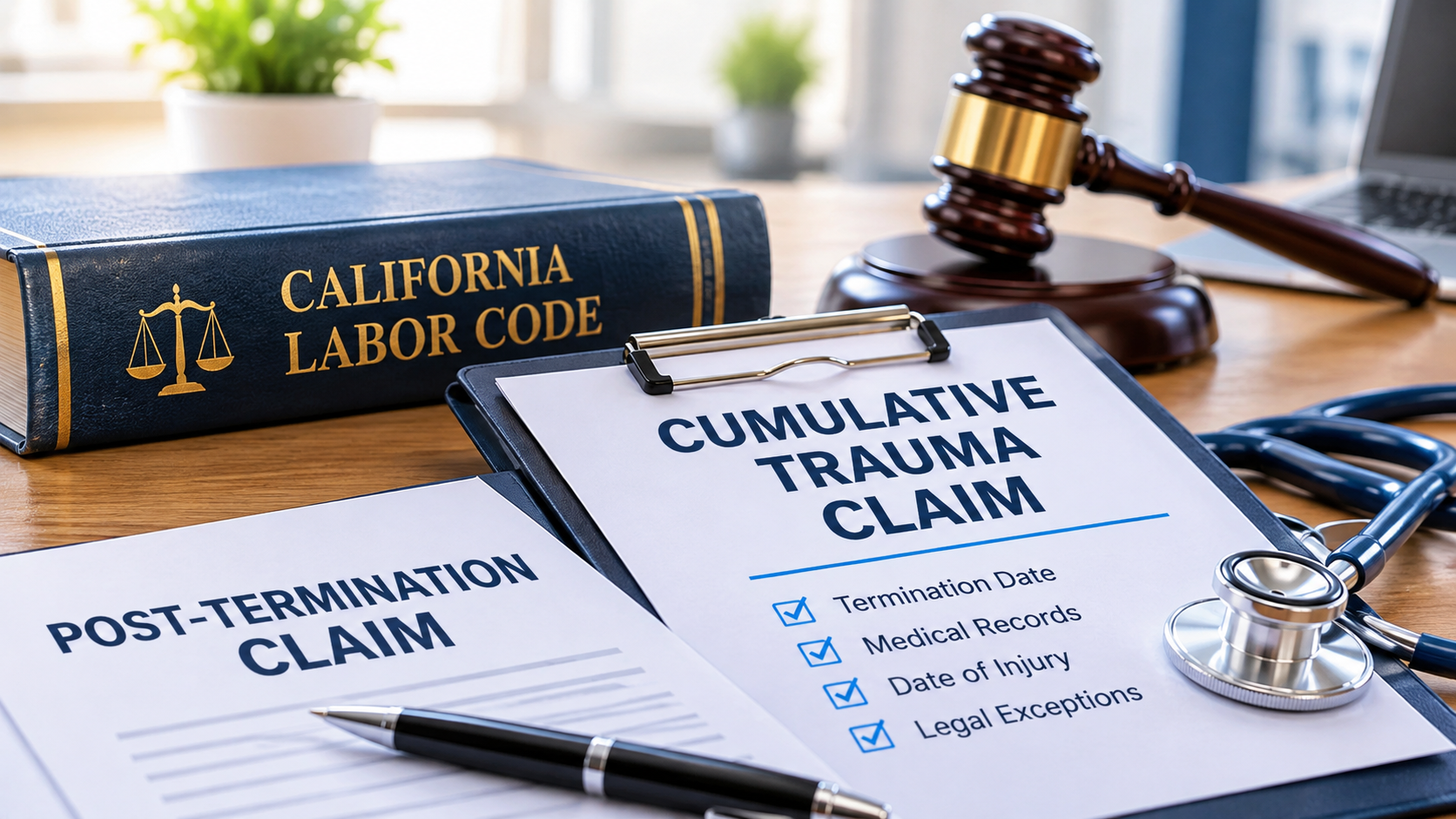
Post-termination cumulative trauma claims in California are a growing share of the caseload. In its study of accident years 2022 through 2024, the WCIRB found 58% of CT claims were filed after employment ended, up from 44% a decade earlier, and that nearly all were litigated. For defense firms, that makes the dates and documents in the file especially important.

For California workers' compensation defense firms, a records retrieval request marked "received" can still be missing months of treatment history. Discovery generally closes at the mandatory settlement conference (MSC), and two 2025 decisions show how strictly that cutoff is enforced. A dated retrieval history and a clear handoff to counsel give the legal team time to act on gaps while options still exist.